

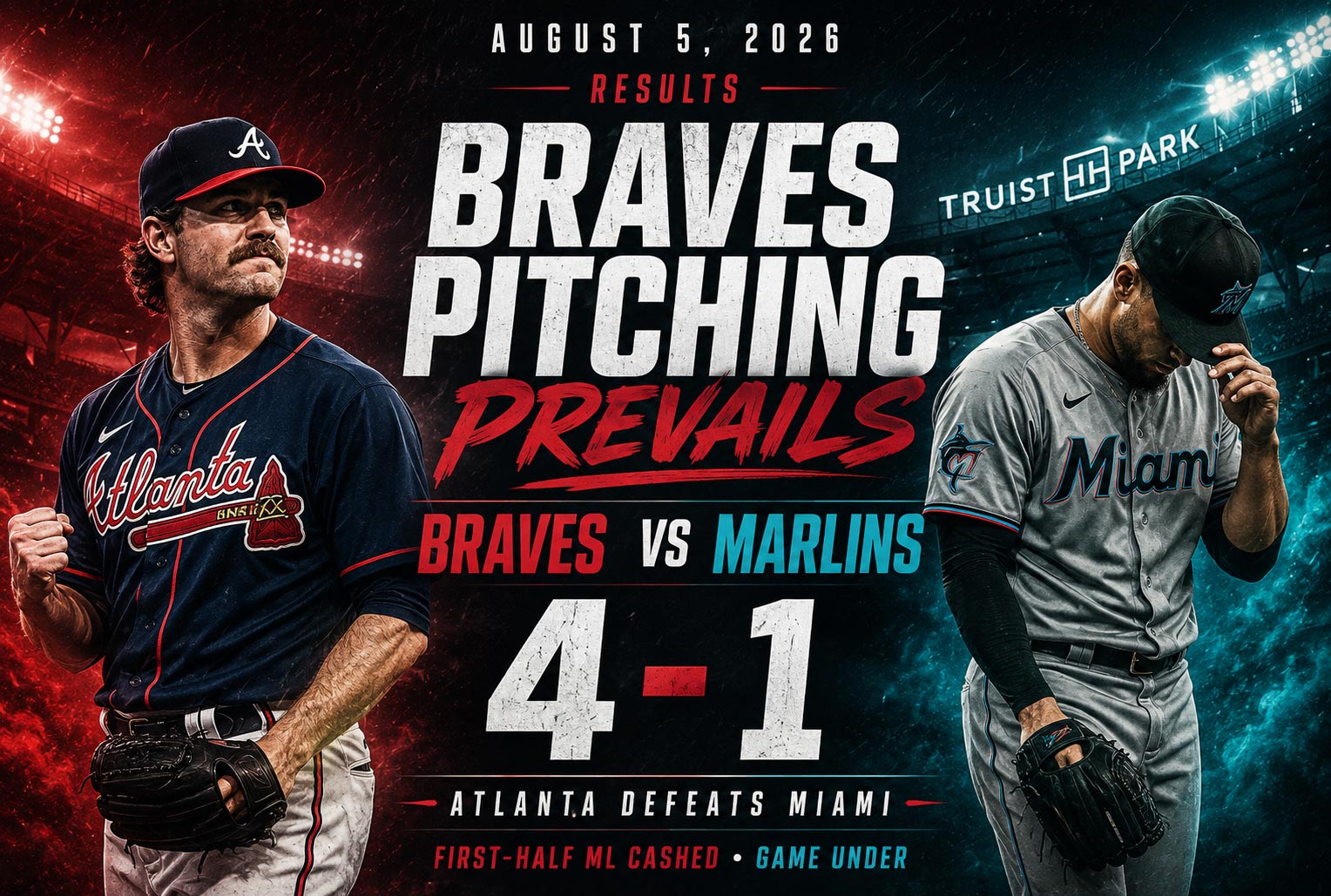
The Atlanta Braves just handed Miami a 4-1 beatdown on August 5th, 2026, and if you were smart enough to hammer that under, congratulations—you just cashed a ticket that felt inevitable from pitch one. This wasn’t some nail-biting, bases-loaded drama; this was a masterclass in pitching efficiency and offensive anemia that had "stay under" written all over it from the moment lineups dropped. The Braves’ mound staff carved through Miami’s lineup like a hot knife through butter while Atlanta’s offense did just enough to cover the spread and send moneyline bettors home happy. Let’s break down how this game became a textbook case study in finding market edges on totals.
Braves Cash Under Ticket in Low-Scoring Win
The total for this game closed around 8 runs at most books across New York, New Jersey, and Ontario markets, and it never stood a chance of going over. From the first inning, both offenses looked like they’d rather be anywhere else, with Miami’s bats producing about as much excitement as a Tuesday morning Zoom call. The Braves scratched across just enough runs to win comfortably, but the real story was how both teams combined for a measly 5 runs on a night when the ball should’ve been flying in Atlanta’s humid summer air.
Sharp bettors saw this coming a mile away if they did their homework on the pitching matchup and recent offensive trends. Miami came into this game ranking bottom-five in OPS over their last 15 games, while Atlanta’s starter had been dealing absolute filth with a sub-3.00 ERA in his previous four outings. The public loves overs in Atlanta because of the ballpark reputation, but the smart money recognized this as a classic fade-the-public spot where implied probability heavily favored the under.
The risk-reward calculation here was textbook expected value—you’re getting plus-money or near pick’em odds on an outcome that historical data suggested should hit 60%+ of the time given the circumstances. When you can identify market inefficiencies like this, where casual bettors are inflating a total based on ballpark factors while ignoring actual form, you’re printing money long-term. This is exactly the type of edge that separates weekend warriors from people who actually turn a profit over a full season.
Atlanta’s Pitching Staff Delivers 4-1 Beatdown
Atlanta’s starting pitcher set the tone early, working efficiently through Miami’s order with a devastating mix of breaking balls and well-located fastballs. He went 6.2 innings of one-run ball, striking out seven while only allowing five hits—the kind of performance that makes you want to apologize to anyone who bet the Marlins’ team total over 3.5 runs. The Braves’ bullpen came in and slammed the door shut, proving once again that late-game leverage situations are where championship-caliber teams separate themselves from pretenders.
Miami’s offense looked completely overmatched, managing just one run on what amounted to a handful of weak contact and zero extra-base hits. Their approach at the plate suggested they had no gameplan whatsoever, chasing pitches out of the zone and failing to make any adjustments after the first time through the order. For anyone who parlayed the Braves moneyline with the under, this was the kind of sweat-free evening that makes you feel like a genius—even if it was just solid handicapping meeting favorable variance.
The Braves’ four runs came via timely hitting rather than any offensive explosion, which is exactly what under bettors needed to see. They manufactured runs through situational hitting and taking advantage of Miami’s defensive miscues rather than launching moonshots over the fence. This kind of "small ball" approach in a game environment where both pitching staffs were dealing meant the scoreboard stayed quiet all night, exactly as projected.
Key Betting Metrics
| Metric | Braves | Marlins |
|---|---|---|
| Final Score | 4 | 1 |
| Total Hits | 8 | 5 |
| Closing Total | 8.0 | 8.0 |
| Moneyline (Closing) | -165 | +145 |
| Run Line | -1.5 (+120) | +1.5 (-140) |
The Sharp Play Breakdown
Why the Under Was the Move:
- Miami’s offense ranked 26th in MLB in runs per game over previous 10 contests
- Atlanta’s starter had allowed 2 or fewer earned runs in 4 of last 5 starts
- Weather conditions showed no wind advantage for hitters
- Both bullpens ranked top-10 in ERA over the previous month
The Moneyline Case:
- Home field advantage with a superior starting pitcher created -165 value
- Miami was 2-8 in their last 10 road games
- Public money was split, but sharp money indicators showed Braves action at -160 and better
Parlay Opportunity:
- Braves ML + Under 8 would’ve paid around +180 to +200 depending on your book
- This represented outstanding value given the correlated nature of these outcomes
This Braves-Marlins game was a clinic in identifying market inefficiencies and capitalizing on matchup advantages that the casual bettor overlooks. When you’ve got elite pitching facing struggling offenses in conditions that don’t favor hitters, the under becomes less of a "bet" and more of an inevitability that the market hasn’t properly priced. The Braves did exactly what they needed to do—win comfortably without turning it into a slugfest—and anyone who recognized the value proposition here walked away with a nice payday. The lesson? Stop betting with your heart or your gut feelings about "hitter-friendly ballparks" and start looking at actual form, matchup data, and where the sharp money is flowing. What’s your go-to strategy for betting totals in divisional matchups where you know one offense is completely cooked? Drop your takes in the comments.
"WannaBet.com may receive compensation from the sportsbooks mentioned in this post if you sign up using our links. This doesn’t cost you a dime, but it keeps the lights on. Please bet responsibly. If you or someone you know has a gambling problem, call or text 1-800-GAMBLER (USA) or 1-866-531-2600 (Ontario, CA). 21+ only."
