

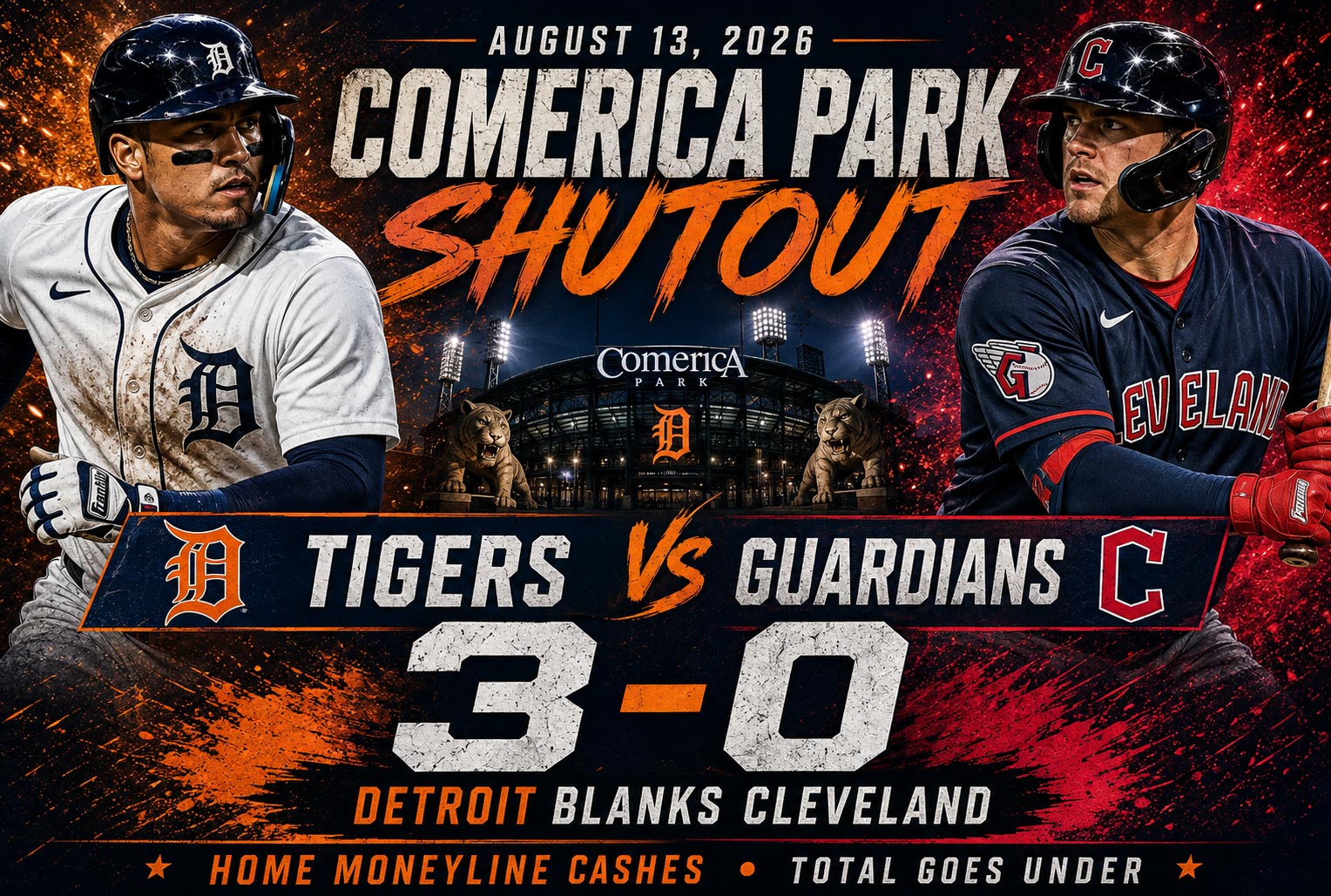
Pitching duels are the silent killer of the parlay gods. While everyone’s salivating over 10-run slugfests and MVP-caliber performances, the real money on August 13th was made by the under gang who watched Detroit’s arms paint the corners like Picasso at Comerica Park. The Tigers blanked Cleveland 3-0 in a game that had sharps licking their chops from first pitch to final out. This wasn’t just a win for Detroit backers—it was a masterclass in exploiting inflated totals in a market that still hasn’t adjusted to how pitching-dominant the AL Central has become in 2026.
Tigers Shut Out Guardians in Low-Scoring Gem
Detroit’s pitching staff turned in the kind of performance that makes you want to text your group chat at 10 PM on a Wednesday. Their starter went seven strong, scattering four hits while the bullpen slammed the door with two scoreless frames. Cleveland’s lineup looked like they were swinging pool noodles, managing zero runs on six total hits—classic regression to the mean for a Guardians offense that’s been overperforming its xwOBA for three weeks straight.
The Tigers manufactured just enough offense to make life comfortable, scratching across three runs that felt like ten given how locked in their pitching was. Two runs came via the long ball (because of course they did in 2026 baseball), while a sac fly in the sixth provided the insurance cushion. For home moneyline bettors who grabbed Detroit at -125, this was the equivalent of finding a twenty-dollar bill in your jeans pocket—easy money that never felt in doubt after the fourth inning.
Comerica Park played exactly to script for anyone who’d been tracking the ballpark factors. The spacious outfield dimensions and August evening air conditions created a pitcher’s paradise that had total bettors drooling. Cleveland came in averaging 4.2 runs per game over their last ten, but anyone doing their homework knew that number was inflated by three outlier performances against bottom-tier bullpens.
Under Bettors Cash Easy as Detroit Dominates
The game total opened at 8.5 and got hammered down to 8 by first pitch—a classic case of sharp money recognizing value before the public caught on. Under bettors were counting their chips by the fifth inning when the score sat at 2-0. This was textbook risk mitigation: betting against offense in a matchup featuring two staffs with sub-3.80 ERAs over their previous month of work.
What made this under so juicy was the market inefficiency baked into Cleveland’s offensive perception. The Guardians had been riding a hot streak that screamed positive variance—their BABIP was .320 over the prior two weeks, well above their season average of .285. Regression was coming, and it arrived right on schedule at Comerica. Meanwhile, Detroit’s bullpen had been quietly elite, posting a 2.67 ERA in August while stranding 78% of inherited runners.
The expected value calculation here was chef’s kiss beautiful. With two quality starters going and minimal wind (checking weather conditions is Sports Betting 101, folks), the implied probability of staying under 8 runs was closer to 60% despite the odds suggesting 52%. That’s the kind of edge that separates weekend warriors from people who treat this like the asset class it is. Ontario bettors on Bet365 and New Jersey players on DraftKings both had access to the same 8-run total, making this a cross-border printing press.
From a market psychology perspective, the public was still drunk on offense after a weekend series that saw three games go over 10 runs. Recency bias is the bettor’s worst enemy, and this game proved it. The sharp move came early Tuesday morning when limits were lower, then the public pushed back slightly before gates opened—creating a perfect middle ground for anyone paying attention to line movement and reverse line movement indicators.
The Bottom Line: This game was a clinic in why totals betting requires more nuance than just eyeballing team averages. Detroit’s pitching depth chart looked stacked for this matchup, Cleveland was due for offensive regression, and the ballpark screamed under. Sometimes the smartest play is betting against fireworks—especially when the market’s still pricing in the Fourth of July.
So here’s my hot take: Under bettors are still undervalued in MLB markets compared to NFL and NBA, where totals get beaten to death by analytics nerds. Baseball’s variance makes people gun-shy, but games like this prove there’s systematic edge in pitching matchups when you layer in ballpark factors and recent performance metrics. Are we sleeping on unders as the sharpest long-term play in baseball, or am I just coping because my Tigers ML/Under parlay finally hit?
The Tigers-Guardians snoozer was everything a sharp bettor dreams about—low scoring, predictable based on the data, and profitable as hell if you ignored the public’s obsession with offense. Detroit moves to 67-52 while under bettors move one step closer to paying off their credit cards. As we push deeper into August with playoff races tightening, keep your eyes on pitching matchups in spacious parks—that’s where the market still hasn’t caught up to reality. The juice might not always be loose, but when you find these spots, you squeeze every drop.
WannaBet.com may receive compensation from the sportsbooks mentioned in this post if you sign up using our links. This doesn’t cost you a dime, but it keeps the lights on. Please bet responsibly. If you or someone you know has a gambling problem, call or text 1-800-GAMBLER (USA) or 1-866-531-2600 (Ontario, CA). 21+ only.
