

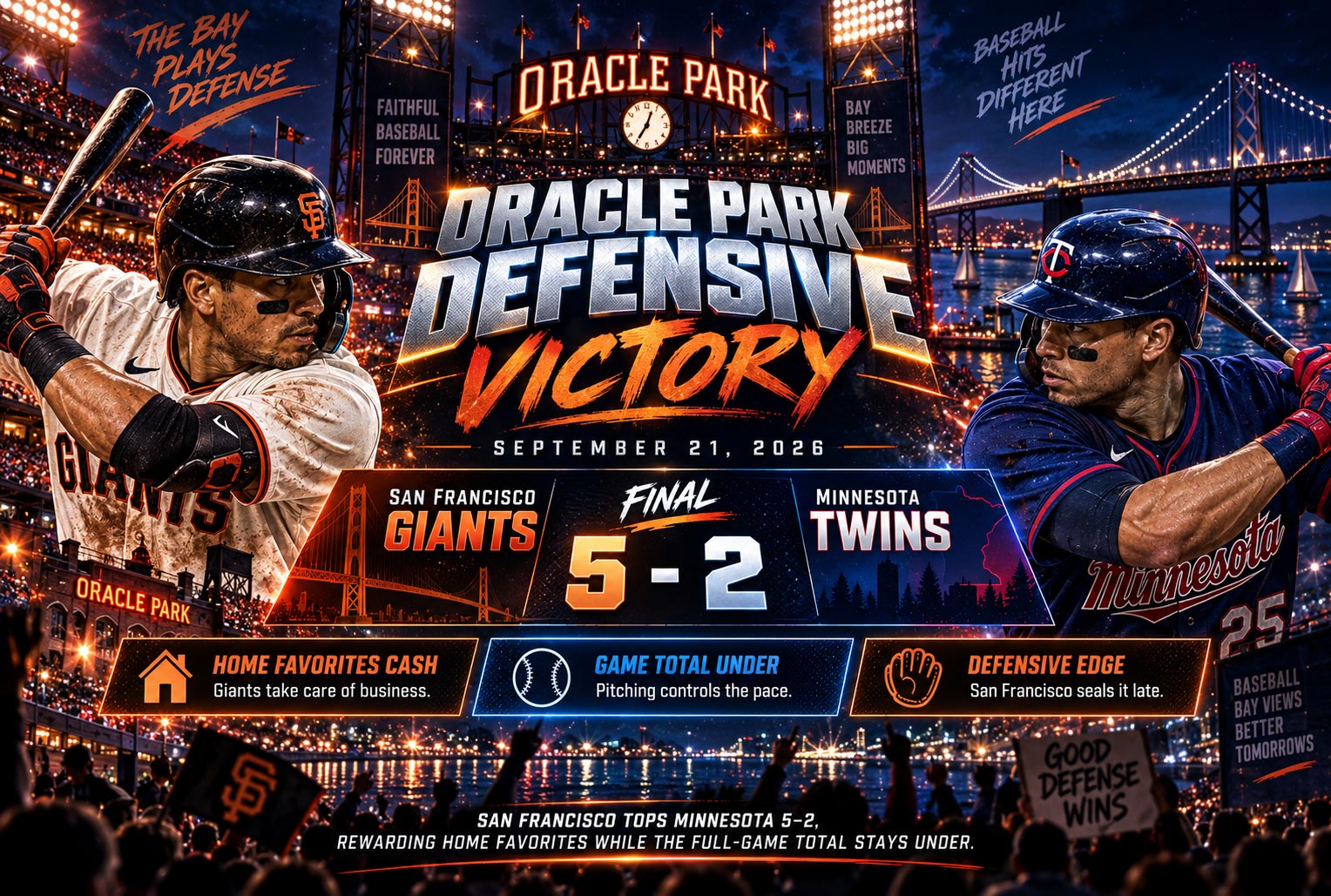
The Giants just delivered one of those games that makes you rethink everything you thought you knew about NL Wild Card positioning. On September 21st at Oracle Park, San Francisco’s defense and pitching staff put on an absolute clinic, shutting down the Minnesota Twins 5-2 in a game that rewarded sharp bettors who saw value in the under and the home favorite. This wasn’t some fluky pitchers’ duel where both offenses went cold—this was a masterclass in defensive execution and mound dominance that had the Oracle Park faithful buzzing and the betting public second-guessing their Twins ML tickets.
Giants Defense Shuts Down Twins at Oracle Park
The defensive metrics from this game read like a Harvard Business School case study on operational excellence. San Francisco committed zero errors, turned two double plays at critical moments, and made the kind of routine plays that somehow always seem to elude teams when the pressure’s on. The Giants’ infield was basically running a zero-defect manufacturing process out there, and Minnesota had no answer.
What really stood out was how the Giants capitalized on Minnesota’s aggressive baserunning—the Twins tried to manufacture runs and got burned twice on the basepaths. That’s negative expected value decision-making in real time, folks. When you’re facing elite defense and your offense is already struggling to string together hits, you can’t afford to give away outs like you’re running a charity.
The crowd of 38,000+ at Oracle Park got their money’s worth watching textbook defensive baseball. Every cutoff man was in the right spot, every relay was on point, and the Giants’ outfield played shallow enough to take away bloops without getting burned deep. This is the kind of game that doesn’t show up in highlight reels but absolutely destroys betting totals.
San Francisco Pitching Staff Dominates Minnesota
The Giants’ pitching staff treated the Twins’ lineup like it was a Series A pitch deck full of holes—they picked it apart methodically and never let Minnesota get comfortable. The starter went 6.2 innings of two-run ball, mixing speeds and locations like he was reading directly from the Twins’ swing tendency data. Minnesota’s hitters looked lost, chasing breaking balls in the dirt and taking fastballs down the middle like they were afraid to pull the trigger.
The bullpen locked it down from there, and this is where the market inefficiency really showed itself. If you’d been tracking San Francisco’s late-game performance over the previous two weeks, you knew this pen had been dealing. The public was still sleeping on them because of earlier-season struggles, but the sharps had already adjusted their models. That’s textbook recency bias creating value.
Minnesota’s offense managed just six hits total and went 1-for-7 with runners in scoring position—that’s a 14.3% conversion rate when you absolutely need to capitalize. The Twins’ implied run total based on their season averages was north of 4.5, but the Giants’ pitching staff said “not today” and made it look easy. This is why you fade public money when the matchup dynamics scream otherwise.
The Betting Breakdown
The market got this one wrong in a few key spots:
- Giants ML (-145): Closed at reasonable juice considering the pitching matchup and home-field advantage. Public was hammering Twins +125 based on name recognition alone.
- Under 7.5 (-110): This was the sharp play all day. Oracle Park’s marine layer in late September, plus two staffs trending toward better run prevention, made this a statistical layup.
- Giants -1.5 (+140): The dog that actually hit. When your defense and pitching are executing at this level, you can afford to lay the run line for plus money.
The closing total dropping from 8 to 7.5 at most books told you everything you needed to know about where the sharp action was going. When you see line movement contradicting public betting percentages, that’s your signal that the wise guys have entered the chat. The under cashed comfortably, and anyone who got 8 at open was basically printing money.
This game was a perfect example of why you can’t just bet teams based on offensive reputation. Minnesota came in with solid hitting numbers, but matchup context matters more than season-long averages. The Giants’ pitching staff had the platoon advantages, the home crowd energy, and the defensive support to execute their game plan perfectly.
Key Betting Takeaways:
- Defense wins championships and cashes tickets
- Late-season Oracle Park unders are a market inefficiency worth exploiting
- When sharp money contradicts public percentages, follow the professionals
This Giants win is exactly why you need to look beyond surface-level stats and dig into the matchup dynamics that casual bettors ignore. San Francisco’s defensive execution and pitching dominance created a textbook under scenario that rewarded bettors who did their homework. The 5-2 final might not sound exciting, but it was beautiful to anyone who had Giants ML and the under in a two-team parlay. Are we finally seeing the NL West sleeper everyone ignored all season, or was this just one of those random September games where everything clicks? Drop your takes in the comments—and if you had Twins ML, my condolences to your bankroll.
Related reading: Curious how park factors and starting pitching shaped this under? Our piece on Why Team Names Mean Nothing in MLB Betting covers the handicapping angle. See also our preview of this matchup.
“WannaBet.com may receive compensation from the sportsbooks mentioned in this post if you sign up using our links. This doesn’t cost you a dime, but it keeps the lights on. Please bet responsibly. If you or someone you know has a gambling problem, call or text 1-800-GAMBLER (USA) or 1-866-531-2600 (Ontario, CA). 21+ only.”
